ENG
ENG Feedback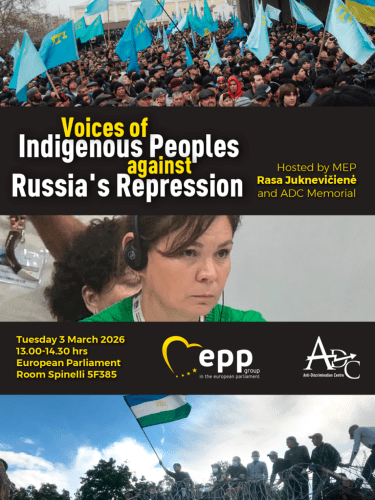
We would like to invite you to an event titled “Voices of Indigenous Peoples against Russia’s Repression”, which will take place next Tuesday, 3 March, at 13:00–14:30 in the room 5F385 in the European Parliament in Brussels. The event hosted by the MEP Rasa Juknevičienė and co-organized with the Anti-Discrimination Centre Memorial – Brussels.
English/Russian interpretation will be provided.
The event will also be streamed. If you wish to follow the event online, indicate so in the registration form. You will receive the connection link one day before the event.
In recent years — since the beginning of Russia’s aggression against Ukraine and the occupation of Crimea — the Russian Federation has moved from systemic oppression of Indigenous peoples to widespread repression of activists and all those who raise their voices against violations of the rights to identity, religion, territory, environment, and freedom of expression.
The first wave of repression targeted the Indigenous people of Crimea — the Crimean Tatars. In 2016, their representative body, the Mejlis of the Crimean Tatar People, was banned and labelled an “extremist organisation.” All related activities were criminalised by the occupation authorities. Hundreds of Crimean Tatars have been arrested and sentenced to 20 years or more in prison.
Since Russia’s full-scale invasion in 2022, Crimean Tatars in the occupied parts of Kherson Oblast have been forcibly transferred to Russia and disappeared into prisons. In 2025 alone, dozens of Crimean Tatars in Crimea and other occupied territories of Ukraine were kidnapped or arrested under fabricated terrorism charges. Even acts of solidarity by women supporting their imprisoned husbands have led to the arrest of mothers and family members.
Repression is not limited to occupied Ukrainian territories. Since 2024, hundreds of Bashkir activists in Bashkortostan (the Urals) have faced prosecution following mass protests. More than 80 individuals have already received prison sentences for defending environmental rights and opposing the persecution of their community leader.
The years 2024–2025 have also marked a dramatic period for Indigenous peoples of the North, Siberia and the Far East, who are facing unprecedented political repression within the Russian Federation. At the end of 2024, the Indigenous human rights network “Aborigen Forum” was added to the official register of “terrorist” and “extremist” organisations. In 2025, many activists were subjected to searches and interrogations on allegations of “terrorism,” and several were arrested. Daria Egereva, a Selkup activist, is currently imprisoned on entirely unfounded charges of “participation in a terrorist organisation.”
Attempts by the Russian authorities to criminalise Indigenous activism constitute acts of political repression, discrimination and colonial oppression.
Representatives of these movements will address the latest developments at the event:
- Ms Valentina Sovkina, an activist of the Sámi Indigenous People and member of the United Nations Permanent Forum on Indigenous Issues (UNPFII) – online
- Mr Ruslan Valiev, journalist from Bashkortostan, expert on the Baymak case
- Mr Eskender Bariev, Crimean Tatar human rights activist, Head of the Board of the Crimean Tatar Resource Center (Kyiv)