Torture is one of the most widespread crimes committed during Russia’s ongoing full-scale invasion of Ukraine. According to the Kharkiv Human Rights Protection Group (KHPG), nearly everyone who comes under Russian control and has direct contact with Russian military personnel, government officials, law enforcement officers, or representatives of the occupation authorities or proxy administrations is subjected to torture or other forms of inhuman treatment. This also applies to those currently considered missing. Unless they were killed or managed to escape, those who disappeared while in Russian custody were almost certainly subjected to torture. Women and men, civilians and prisoners of war alike, have been victims of torture. Virtually every prisoner of war and at least 90% of civilian detainees were subjected to torture.

Numerous reports from international organizations have repeatedly verified this. Specifically, the most recent report from the Independent International Commission of Inquiry on Ukraine to the Human Rights Council (A/HRC/58/67) dated March 19, 2025, stated:
“In detention facilities in Russian-occupied areas in Ukraine and in the Russian Federation, Russian authorities have systematically used torture against certain categories of detainees to extract information and coerce and intimidate them. The most brutal forms of torture were used during interrogations, which were often led by the Federal Security Service and the Investigative Committee of the Russian Federation. The evidence shows that, when Federal Security Service personnel were present in detention facilities, they exercised the highest authority over all other services and forces, including heads of facilities, and gave orders.
Russian authorities have systematically used sexual violence as a form of torture against male detainees. The report details additional cases of war crimes of rape and sexual violence, committed as a form of torture, against female detainees.”
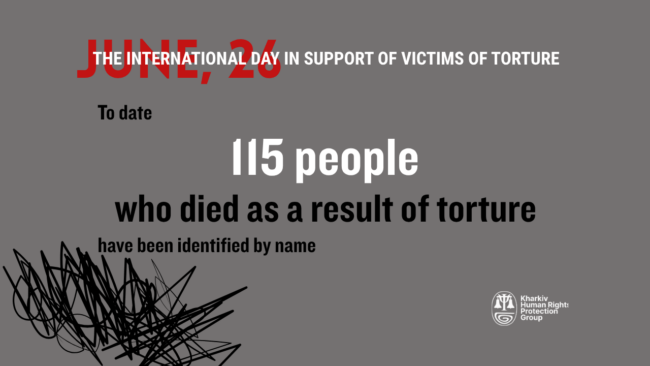
Reports with similar conclusions have also been presented by the Office of the United Nations High Commissioner for Human Rights. They similarly confirm that Russian authorities systematically and extensively subject Ukrainian prisoners of war and detainees to torture, cruel treatment, and detain them in inhumane conditions. To date, 115 people who died as a result of torture have been identified by name.
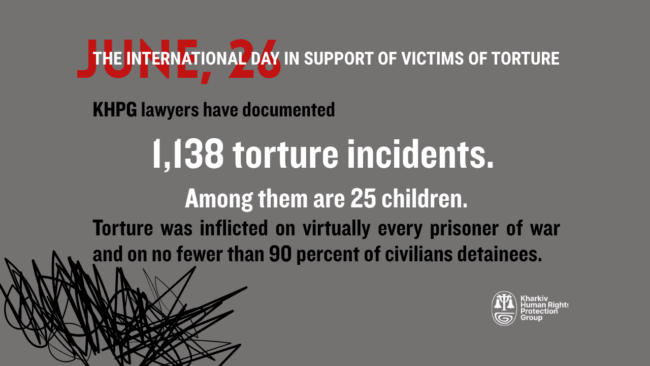
Since the start of the full-scale invasion, KHPG has gained extensive experience documenting cases of torture carried out by Russian military personnel, officials of Russian law enforcement, and government representatives. Currently, KHPG lawyers have documented 1138 incidents (including 25 children) where there are reasonable grounds to believe that torture was committed. This figure includes both civilians and military personnel who have been captured and are under Russian control. The primary method of documenting these cases is through direct interviews with victims and witnesses.
Those most at risk under the occupation are former military personnel who served in the armed forces between 2014 and 2021, law enforcement officers, border guards, rescue workers, as well as employees of state and local government bodies, local council members, public figures, entrepreneurs, journalists, and priests. It appears that representatives of the occupying forces had lists of such individuals in advance. They were either abducted and disappeared without a trace or illegally detained and subsequently held in detention sites—usually unofficial and often completely unsuitable for holding people—where the conditions could be classified as torture. Additionally, prisoners were subjected to brutal torture in attempts to extract desired information or force confessions, such as assisting the Armed Forces of Ukraine through providing targeting information, or to coerce them into demonstrating loyalty to the Russian Federation.
Torture is a common practice; it is widespread and applied systematically. Its geographical spread corresponds with the locations of combat zones and occupied territories and also includes areas within the Russian Federation. Torture occurs at all locations where Ukrainian prisoners of war or detainees are held. This includes both informal detention sites such as basements, garages, hangars, sheds, and abandoned buildings, as well as official detention facilities specifically designed for holding prisoners or convicts, like police station cells, temporary detention centers, pretrial detention facilities, and penal colonies.
Human rights organizations and joint civil society initiatives continue to identify locations where prisoners of war are held. Thanks to these efforts, 196 detention sites within Russia and about 84 in the temporarily occupied territories have been documented.
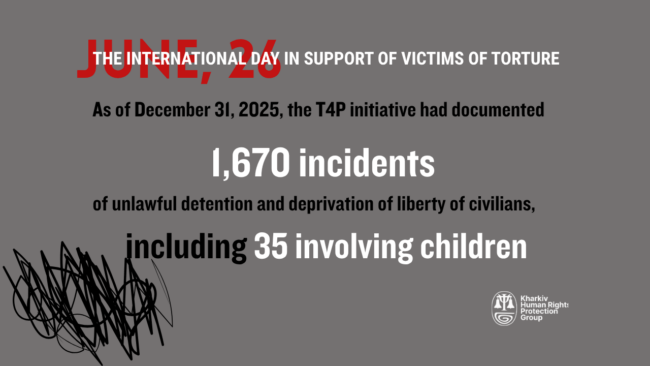
Torture is applied both during detention and afterward while people are confined, including in so-called filtration camps and during transfers. Torture often occurs alongside or before other crimes—such as unlawful deprivation of liberty, intentional killings, sexual violence, enforced disappearances, and others. The patterns we have identified so far focus on the categories of victims subjected to torture, the purposes and types of torture used by the occupiers, and the most common forms employed in all cases.
Types and methods of torture
Torture is inflicted on everyone without exception—both civilians and military personnel—in all detention facilities throughout the period of captivity. At every detention site through which a Ukrainian prisoner passes, unbearable conditions and an atmosphere of humiliation and intimidation have been created. Prisoners are subjected not only to physical torture but also to psychological pressure and abuse. Torture was used during interrogations and as part of the prisoners’ daily routine. During interrogations, torture was targeted and as brutal as possible, always carried out by a group of torturers against a single prisoner. The interrogators stated the purpose of the interrogation and tortured the prisoner in an attempt to achieve that goal.
The types of torture described by the prisoners include:
Beatings
This is the most common form of physical violence, which affects detainees throughout their time in detention in the Russian Federation. According to detainees’ testimonies, beatings happen in all detention facilities, at any time, and during any activities. They were beaten during transfers, intake at various facilities, in cells, during inspections, while being led to the shower or dining hall, while moving through the facilities, and on the way to interrogations. Beatings could happen several times a day.
Beatings are inflicted with hands and feet, as well as with various objects—sticks, batons (clubs, truncheons), tools (hammers, wrenches, etc.), plastic pipes, rubber hoses, ropes with knots, belts with metal buckles, and others. They were beaten so badly that they lost consciousness. Dozens of the 270 victims who sought help from the Kharkiv Human Rights Protection Group had all their teeth knocked out.
They hit me with a bat, smashing my legs very hard. They broke my leg—it was broken with about fifty blows. My legs turned completely black; I couldn’t walk for two months. They also punched and kicked my arms and ribs. I had three broken ribs. They beat me until I lost consciousness. At first, they beat us very harshly. They hit us every day. Once, during a check, they also shocked me in the groin with a stun gun. … they punched and kicked us with their hands, feet, sticks, batons… a shovel handle… stun guns… (C. 3).
Electric shock torture
Electric shocks targeted various parts of the body: hands, feet, along the spine, tailbone, genitals, buttocks, heels, head, and under the ribs.
Electric shocks were used on detainees both during interrogations to extract confessions and testimony, and during daily interactions with them. During interrogations, electric shocks were applied for extended periods and had severe effects on the victim. In other instances, electric shock was used to “stimulate” detainees. This forced them to move faster and to comply with the guards’ demands and orders.
They shocked me in the leg area. They turned on the stun gun so it would fire for a few seconds, then pressed it against my body and ran it down my back from my neck to my tailbone. They also shocked my fingers (C. 9).
Stress positions and forced physical exertion
This type of torture includes cases where prisoners are forced to stay in specific positions for long periods or to do physical exercises. This form of torture is common in Russian captivity. Russian security officials use it to fill the entire time prisoners are held in detention. It is part of the daily routine.
A common position was the so-called “swallow”—a forward-leaning stance with the head pressed against the wall and the arms raised behind the body. Another was “stretching”—a stance facing the wall, with arms raised and palms against it (sometimes with the backs of the palms pressed against the wall), and feet shoulder-width apart.
Forcing prisoners into stressful positions and making them perform physical exercises had very similar effects. Restricting their ability to move freely and change body positions, placing them in uncomfortable and unnatural postures, and in positions requiring special physical training (the “splits” position), along with forcing prisoners to endure forced physical exertion while exhausted and chronically undernourished, suggest an intent to exhaust and humiliate them.
We were told we had to stand the entire time. We weren’t allowed to lean on anything, sit down, or move. We could only use the restroom or drink water with permission. If we didn’t obey, we were taken out into the hallway and beaten. We had to stand from 6:00 a.m. until 10:00 p.m., and I did so every day from February 10, 2023, to October 23, 2024. As a result of standing, I now have problems with my legs; I was granted a third-degree disability for life (C. 3).
Sexualized Methods of Torture
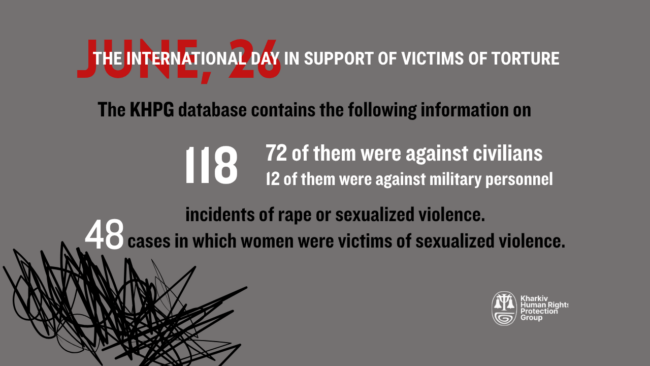
Sexualized violence includes not only rape, forced sex, or other acts involving penetration of the human body, but also other acts not involving penetration or even physical contact. The interviewees were reluctant to speak about sexualized violence. At the same time, such incidents likely caused significant psychological suffering, and this is precisely what led most of the interviewees to provide accounts of these events after all.
The detainees did not report specific instances of rape, but violence bearing all the hallmarks of sexualized assault was frequently inflicted on them. This included hitting them in the genitals and groin area, using stun guns on their genitals and anus, stripping them and making them stay naked, forcing them to do physical exercises while naked, threatening rape, and simulating rape. All interviewees mentioned that threats of castration and mutilation of the genitals were constant and intentional.
The perpetrators of the torture openly told the detainees about the purpose of the sexualized violence. They sought to inflict such injuries and damage on the detainees that would make it impossible for them to have children or engage in sexual activity in the future.
The prisoners’ testimonies show that sexualized violence was used for two main purposes: to harm the prisoners’ sexual health and to humiliate them. Prisoners reported that after their release, they experienced sexual health problems, such as abnormal semen test results and pain in the groin area. None of the respondents had experienced anything similar before their capture.
One of the prisoners recalled that he was constantly interrogated by two men—a lieutenant and a heavyset captain. Russian convicts serving sentences at this detention facility sometimes participated in the interrogations. The prisoner was threatened that if he did not confess to the bombing of the Drama Theater in Mariupol, the convict would rape him. After this threat, the convict pulled down his pants, demonstrating his willingness to carry out the interrogator’s order. The prisoner began to cry, and the lieutenant ordered the convict to pull up his pants. But after that, the lieutenant said that the prisoner would never have children, and with those words began to shock the prisoner with an electric current (a stun gun) on his genitals. The prisoner recalled that he went into shock (C. 6).
Threats and simulated executions
Threats of murder and physical destruction constantly accompanied Ukrainian prisoners of war in Russian captivity. The interviewees recalled that from the very beginning of their captivity, Russian military personnel, militants from the so-called “LPR” and “DPR,” and Russian law enforcement officers threatened them with murder and reprisals, stating that Ukrainians would not return home alive. These threats were not personalized and were directed at all prisoners who heard them. This was part of the daily pressure exerted on Ukrainians.
One prisoner described how, at the colony in Mordovia, guards sometimes led them outside, made them kneel, and subjected them to a mock execution by throwing stones at a metal shield. A sound resembling a gunshot rang out. The prisoners couldn’t see what was happening, which made them extremely frightened. As a result, they often lost control of their bodily functions and urinated or defecated where they stood.
Asphyxiation / Suffocation
This form of torture involves depriving the victim of the ability to breathe by blocking the airways. This blockage is carried out in various ways—such as choking the victim by squeezing their neck, pouring a large amount of water through a cloth, placing a plastic bag over the person’s head, or confining them in a cramped space without access to fresh air and leaving them there for an extended period.
Suffocation was most often used during interrogations and was part of other torture methods.
Strangulation by squeezing the victim’s neck was often combined with other methods that increased the asphyxiation effect. Person S.2 indicated that the torturers combined strangulation with simultaneous blows to the solar plexus. Such actions caused the detainees to lose consciousness. Afterward, the victims were “revived” with a stun gun, and the cycle repeated.
Dog attacks
In penal institutions in the Russian Federation, dogs are used to secure the perimeter and prevent convicts from escaping. They are also employed during the transport of particularly dangerous prisoners. In the case of Ukrainian prisoners, dogs are used to intimidate them and cause injuries.
Those interviewed testified that it was common practice to set service dogs on prisoners, commanding the dogs to attack and bite them, and to keep agitated and irritated dogs close to prisoners. At the same time, the prisoners recalled that medical assistance was not provided in such cases.
The captives recalled that as a result of the dog bites, they were left with wounds and scars. Due to poor conditions regarding food, rest, and recovery, as well as constant psychological pressure and high levels of stress, the wounds healed poorly.
The dog attacks were often accompanied by humiliating remarks directed at the prisoners. One interviewee recalled how the dog handler, while giving orders to the dog, shouted: “Bite the Ukrop!” and “Find the contracted soldier!” (C. 2).
Creating inhumane and degrading detention conditions
The conditions in which the Ukrainian prisoners were held can clearly be considered a form of torture, as they instilled in the prisoners a constant sense of fear, vulnerability, defenselessness, and helplessness. The prisoners could do nothing; they had no ability to influence the situation or their own circumstances in any way. They had no control over any changes in their conditions of detention; they could not complain, seek help, or appeal to any authorities, organizations, or individuals. The prisoners were completely under the control of the Russians. They were deprived not only of all human rights but also of even the most basic physical and psychological freedoms, such as the ability to move, engage in certain activities, and relieve themselves. Detention facilities were overcrowded with so many captives that conditions in the cells were extremely harsh. For example, in Kupiansk, the torture chamber was in a temporary detention center meant for 140 people, but it held over 500 prisoners. There were nine men in a cell designed for two.
A distinctive form of pressure on the prisoners involved forcing them to eat insignia from their military uniforms, learn the Russian national anthem, Russian songs, and poems, and read poems and count aloud. The pressure also included the perpetrators influencing the prisoners’ intellectual sphere by imposing Russian propaganda narratives and prohibiting not only speaking Ukrainian but speaking at all.
Prisoners reported that the detention conditions were so inhumane, cruel, and degrading that some of them attempted suicide.
Constant physical violence, disrespectful treatment, and humiliation occurred, along with complete control over the prisoners’ bodies, their time, and the spaces they occupied. Captives were forbidden from counting the days or tracking the date and month, in an effort to disorient them and make them completely helpless (C. 5).
Other Types of Torture
Other forms of torture were also used against the prisoners, though they were less common. The interviewees mentioned torture by fire, gas, and binding. One prisoner recalled having his toenails pulled out.
Russians created what prisoners referred to as “gas chambers”.
Once they did this to us. After the check, we ran into the chambers and collapsed, feeling sick. FSIN officers and special forces soldiers sprayed gas into the chamber from small canisters and sealed all the openings, ordering everyone to stay still and not move. We were not allowed to open the window. We stood like that for about an hour. We couldn’t breathe, we were suffocating, and tears streamed down our faces (C. 5).
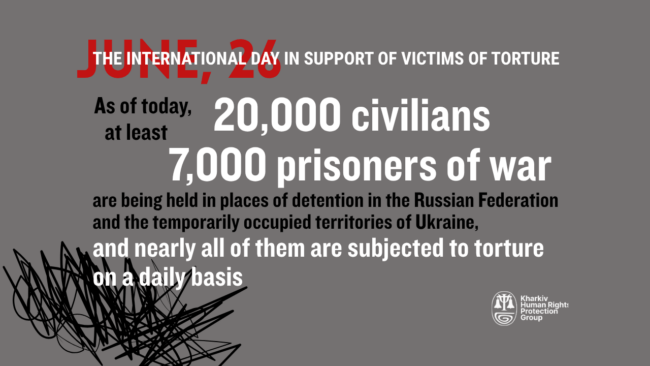
Torture is a constant practice used on all Ukrainians under full Russian control. This includes both prisoners of war and civilians. The widespread, systematic, and uniform nature of torture in all detention sites holding Ukrainian captives shows that this is a coordinated, approved, and centralized policy by Russia against Ukrainians. The testimony obtained indicates that the Russian military and its affiliated agents committed multiple violations of international law, including acts that constitute crimes dangerous to the public under international humanitarian and criminal law.
It is important to emphasize that, as of today, no fewer than 20,000 civilians and 7,000 prisoners of war remain detained in places of confinement across the Russian Federation and the temporarily occupied territories of Ukraine, and that nearly all of them are subjected to torture on a daily basis.
The Kharkiv Human Rights Protection Group (KHPG) is one of Ukraine’s oldest human rights organizations. Since 2014, KHPG has documented war crimes committed in eastern Ukraine. Following Russia’s full-scale invasion in 2022, it expanded its documentation efforts to cover incidents across all regions of Ukraine that may constitute crimes under the Rome Statute of the International Criminal Court, including genocide, crimes against humanity, and war crimes.
KHPG is also one of the founding members of the Tribunal for Putin (T4P) initiative, a coalition of more than two dozen civil society organizations working to ensure accountability for crimes committed by the Russian Federation.
From the very beginning of the full-scale invasion, KHPG has systematically documented war crimes committed by Russian military personnel and other individuals acting on behalf of or affiliated with the Russian Federation. The scale, brutality, and inhumanity of these crimes have been staggering and continue to underscore the urgent need for expanded support and assistance for victims. The KHPG focused mainly on those who experienced physical violence, were subjected to torture, or whose family members or loved ones had been killed or went missing.
The publication is created in the framework of the project “Documenting and analysing international crimes committed by the Russia’s armed forces after 24.02.2022, helping victims of these crimes and informing on crimes” implemented by Kharkiv Human Rights Protection Group, Center for Civil Liberties and ADC Memorial Brussels, funded by the European Union.